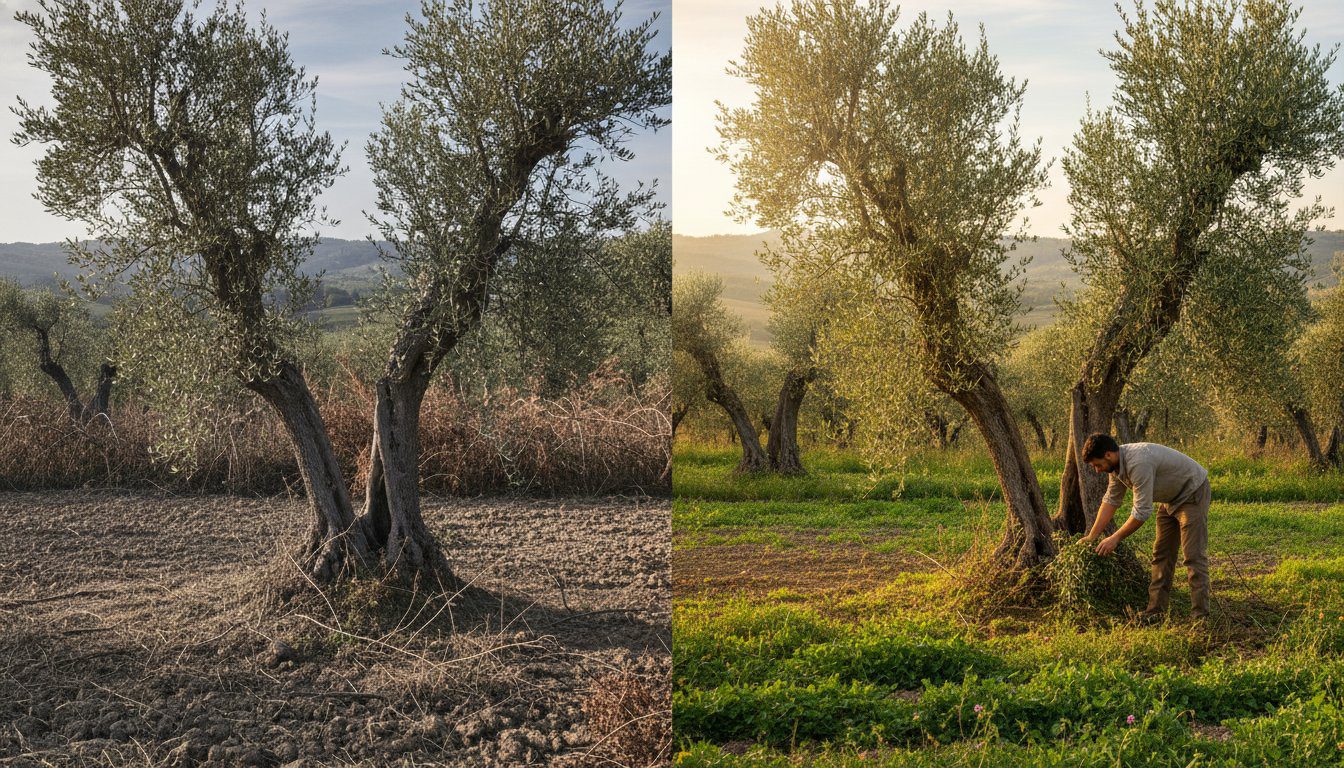
Circular Economy in Agriculture: The Ager Oliva Model for Land Restoration
Imagine walking through a landscape where 4 million olive trees stand in ghostly silence, choked by brambles and forgotten by time. This neglect now threatens nearly 30% of our traditional agricultural land, turning a heritage of biodiversity into a dry fire hazard. You’ve likely felt that sustainability has become a hollow buzzword, yet the principles of economia circolare agricoltura offer a concrete, muddy-boots path to bring these groves back to life. You crave a connection to your food that goes deeper than a supermarket shelf, a way to protect the land before its history is erased by silence.
In this article, you’ll discover how the Ager Oliva model transforms these abandoned fields into thriving, carbon-sequestering ecosystems. We’ll show you how restoring a single tree captures approximately 10kg of carbon every year and how your personal support results in world-class organic oil delivered directly to your door. It’s time to move beyond environmental anxiety and become a protagonist in a story where nature, tradition, and community finally come full circle.
Key Takeaways
Understand how the concept of economia circolare agricoltura transforms land abandonment from an environmental waste into a thriving ecosystem of rebirth and sustainable production.
Discover the “upcycling” process where neglected olive trees are restored to health, turning forgotten resources back into sources of world-class organic oil.
Learn how restoring these ancient landscapes acts as a permanent carbon sink while protecting the irreplaceable cultural heritage of the Tuscan hills.
Explore how individuals and companies can lead the green transition by integrating land restoration into ESG goals through authentic, high-impact partnerships.
See how the simple act of adopting a tree allows you to become a guardian of the land, providing immediate support to save Italy’s four million abandoned olive trees.
What is the Circular Economy in Agriculture? Beyond Waste Management
The 2026 European Green Deal sets a transformative path for our fields, moving beyond simple recycling to a total systemic rebirth. In this landscape, economia circolare agricoltura represents a shift from the exhausted “take-make-dispose” mindset to a “restore-nurture-produce” philosophy. For too long, the linear model has treated land as a disposable resource. When a grove is abandoned, it isn’t just a loss of profit. It’s a wound in the landscape. Italy has lost approximately 2.6 million hectares of cultivated land over the last 25 years, according to agricultural census data. This abandonment is the ultimate environmental waste, leading to soil erosion and increased fire risks.
To truly grasp this change, we have to look at the core principles of What is the Circular Economy? and apply them to the soil. In our olive groves, biodiversity acts as the primary currency. It’s the heartbeat of a resilient system. We don’t see an olive tree as a mere production unit. It’s a living heritage that breathes life into the Tuscan hills. By restoring these giants, we aren’t just cleaning up a mess; we’re restarting a biological engine that captures carbon and protects the fragile balance of our ecosystem.
The Three Pillars of Agricultural Circularity
Circular success depends on three vital actions. First, we regenerate natural systems. Instead of stripping the soil with chemicals, we use organic matter to build fertility. Second, we design out waste. Every pruning branch and olive pit has a purpose, whether as mulch or biomass. Third, we keep products in use through short supply chains. By connecting a tree directly to a protector, we eliminate the 30% to 40% waste often found in long, industrial food loops.
The Economic Impact of Circular Restoration
Restoring an abandoned grove turns a liability into a thriving asset. It’s a concrete solution to hydrogeological risk. A well-maintained terrace can prevent soil landslides that cost municipalities thousands of Euros in emergency repairs. Healthy, centuries-old trees provide “ecosystem services” including the sequestration of roughly 30kg of CO2 per tree annually. This economia circolare agricoltura model also fuels the local job market. We’ve found that for every 1,000 trees brought back to life, we create enough work for a dedicated local specialist, ensuring that the wealth of the land stays in the hands of those who cherish it.
The Ager Oliva Model: A Living Case Study of Circularity
An abandoned olive tree isn’t just a silent part of the landscape; it’s a lost opportunity for our planet. In Tuscany, more than 4 million olive trees currently stand neglected. This abandonment creates a “waste” of natural resources, leading to increased fire risks and a decline in local biodiversity. Our model transforms this neglect into a productive loop. We don’t see a dying tree; we see a biological engine waiting to be restarted. By applying the principles of economia circolare agricoltura, we treat the restoration of these secular giants as a high-impact form of upcycling.
This methodology aligns with the global vision for a Circular Economy in Agriculture. Instead of relying on external chemical inputs, we focus on regenerating existing land and resources to foster sustainable rural development. Since our launch in 2021, we’ve proven that the most effective way to protect the environment is to restore the balance that already exists within the Tuscan hills.
From Neglect to Rebirth: The Pruning Cycle
The journey begins with specialized organic pruning. Our experts remove dead wood to allow light and air back into the heart of the tree. We don’t discard the resulting biomass; we shred it and return it to the soil. This process enriches the ground with carbon and nutrients, eliminating the need for synthetic fertilizers. A healthy, restored tree can sequester up to 20kg of CO2 per year, turning a carbon source into a powerful carbon sink. It’s a technical recovery that breathes life back into the roots.
The Transparency Loop: Tracking Your Impact
We use technology to bridge the distance between busy urban lives and the quiet Tuscan countryside. Every supporter receives the exact GPS coordinates of their rescued tree. Giving a name to an olive tree, like “Aurelio” or “Speranza,” creates an emotional bond that goes beyond a simple transaction. You can see the return of wild herbs and local fauna through our regular monitoring, witnessing a 15% increase in local biodiversity markers within the first two years of restoration. This transparency ensures that your contribution isn’t an abstract concept but a physical reality you can visit.
The circle finally closes during the harvest. The same tree you saved produces the “Green Gold” of Tuscany. By late autumn, we deliver the organic Extra Virgin Olive Oil directly to your door. It’s the tangible result of a cycle that starts with a gesture of care and ends with the purest taste of the land. You can become a part of this vital restoration by deciding to adopt your own olive tree and starting your journey as a custodian of the landscape.
Environmental and Social Benefits: The True “ROI” of Circularity
When we talk about economia circolare agricoltura, we’re looking at a balance sheet that counts birds, roots, and clean air. The Return on Investment (ROI) of the Ager Oliva model isn’t measured in cold spreadsheets. It’s found in the 10 kilograms of CO2 each restored olive tree breathes in every year, turning carbon into life. By saving these trees from neglect, we’re not just farming; we’re protecting a non-renewable cultural heritage that defines the Tuscan horizon. This mission goes Beyond Waste Management by focusing on resource recapture at its most primal level. We restore the soil’s health to ensure economic resilience for small-scale organic farmers who refuse to surrender to industrial homogenization. Through the adoption model, we close the loop between the person in a distant city and the soil under our fingernails.
Carbon Sequestration: Every tree brought back to health acts as a permanent carbon sink, scrubbing the atmosphere 365 days a year.
Preserving Heritage: We treat the landscape as a living museum, ensuring the dry-stone walls and ancient cultivars survive for the next generation.
Social Circularity: Adopting a tree isn’t a transaction; it’s a reconnection to the origin of food that heals the modern rift between city and country.
Biodiversity as a Shield
Abandoned groves are tinderboxes. Since 2021, we’ve seen how unmanaged brambles turn small sparks into devastating wildfires that strip the land bare. Ager Oliva’s circular management clears this fuel, replacing danger with life. In our recovered groves, the return of local wild orchids and beneficial insects proves that a biodiverse grove is a circular engine. Linear monocultures eventually deplete the earth, requiring chemical inputs to survive. Our groves feed themselves through a natural cycle of renewal where every fallen leaf and pruned branch returns nutrients to the roots.
The Gift of the Land: Organic EVO Oil
The final reward of this commitment is an Extra Virgin Olive Oil that tastes of restoration. We’ve eliminated the “waste” of long-distance transport by shipping directly from the grove to the adopter’s door. There’s no middleman, just the pure, peppery burn of polyphenols. When you taste this oil, you’re not just consuming a product. You’re experiencing the sensory result of a promise kept to the land. It’s the flavor of 4,000 trees already saved and the hope for thousands more. This is the heart of economia circolare agricoltura: a system where the harvest doesn’t take from the earth, but celebrates its recovery.
How Individuals and Companies Can Drive the Circular Transition
Real change doesn’t happen in isolation. It grows from the ground up through conscious choices made by people and businesses alike. When you seek a partner for land restoration, you’re looking for more than a logo. You’re looking for roots. Authentic projects in economia circolare agricoltura are defined by their transparency and their physical impact on the territory. In Tuscany alone, 4 million olive trees stand abandoned, waiting for a hand to prune them back to life. Identifying a project that actually puts boots on the ground is the first step toward genuine sustainability.
Transparency: Look for partners who provide GPS coordinates and regular photo updates of the recovered land.
Local Impact: Ensure the project supports local farmers and preserves traditional agricultural landscapes.
Longevity: Choose initiatives that focus on long-term soil health rather than quick, temporary fixes.
Corporate Adoption: A Strategy for Sustainable Growth
Businesses today face a turning point. Since 2021, Ager Oliva has helped companies transform their sustainability goals into a living “Company Forest.” This practical application of economia circolare agricoltura allows you to adopt 100 or 500 trees, providing a tangible narrative for your 2024 ESG reporting. This choice does more than offset a footprint. It creates a bond. Gifting a bottle of organic oil, harvested from the very trees your company saved, turns a simple corporate gesture into a story of rebirth. It’s a way to engage employees with the scent of the Tuscan hills and the pride of protecting our “green gold.”
Individual Action: Becoming a Custodian of the Earth
You can start your journey as a protector of the landscape today. It’s a simple process with profound emotional rewards. You choose your tree on our map, give it a name, and watch it flourish through the seasons. Your small annual contribution fuels a massive environmental recovery effort. You aren’t just a donor; you’re a custodian. There’s a deep sense of peace in knowing that “your” tree is breathing, growing, and producing life because of your care. It’s a lesson in the slow agricultural cycle that we must pass to the next generation, teaching them that beauty requires patience and dedication.
Join the Movement: Adopting an Olive Tree with Ager Oliva
Italy currently faces a silent crisis with 4 million olive trees standing abandoned across its hillsides. These silent giants, many over 300 years old, lose their productivity and carbon-sequestering power when left to overgrowth. Ager Oliva’s mission transforms this neglect into a vibrant example of economia circolare agricoltura. When you choose to adopt, your support goes directly to the soil. We send specialized agronomists to prune, fertilize, and clear the brambles that stifle these ancient trunks within weeks of your contribution.
Your participation isn’t just a digital transaction; it’s a tangible connection to the Tuscan earth. As a guardian of the landscape, you receive a complete transparency package:
A personalized adoption certificate featuring your name and the tree’s unique identification code.
The exact GPS coordinates so you can find your olive tree on a map or visit it in person.
A yearly supply of 100% organic, cold-pressed extra virgin olive oil delivered to your door.
We encourage every adopter to visit our groves. Walking among the silver leaves and feeling the rough bark of a tree you saved provides a perspective that no report can match. Witnessing this economia circolare agricoltura in person proves that digital innovation can successfully preserve ancient heritage.
Be the Protagonist of the Tuscan Rebirth
Time is the greatest challenge for our territory. Once an olive grove remains untouched for more than a decade, the risk of fire and invasive diseases makes recovery nearly impossible. By acting now, you protect a legacy that has survived centuries of history. Ager Oliva acts as your transparent partner in this journey, documenting every step of the restoration. You’re the reason a piece of Tuscany breathes again, ensuring these roots stay firmly in the ground for future generations.
Your First Step Toward a Circular Future
Choosing your tree today means choosing a future where agriculture gives back more than it takes. Our promise is simple: every drop of oil you receive is 100% Italian and cultivated through regenerative practices. Don’t wait for these landscapes to disappear under the weight of abandonment. Take a stand for biodiversity and beauty. You can adopt your olive tree and save a piece of the Italian landscape right now. It’s a small gesture that yields a lifetime of flavor and environmental health.
Become a Guardian of the Tuscan Landscape
The rolling hills of Tuscany deserve more than our admiration; they require our active protection. Embracing a model of economia circolare agricoltura means moving beyond simple waste management to foster a cycle of total rebirth. We’ve already saved over 1,000 abandoned trees, transforming forgotten groves into thriving ecosystems through certified organic production. As an innovative Benefit Company, our mission blends modern transparency with the ancient wisdom of the soil. This ensures every branch we prune and every olive we harvest protects the region’s biodiversity. You aren’t just a spectator in this transition; you’re a vital guardian of the roots that define our history. Giving a name to a tree creates a tangible, emotional bond with the earth that lasts for generations. It’s a chance to turn your values into a living legacy that smells of wild herbs and fresh rain. Your choice today decides whether these historic landscapes flourish or fade into the silence of abandonment. Join us in this luminous mission to restore the beauty of our land.
What does circular economy mean in the context of Italian agriculture?
Circular economy in Italian agriculture means creating a closed loop where zero resources go to waste and every action regenerates the land. In our model of economia circolare agricoltura, we don’t just produce oil; we rescue abandoned trees that would otherwise contribute to land degradation. Since 2021, Ager Oliva has focused on restoring the 4 million abandoned olive trees in Tuscany, turning neglected plots into productive, carbon-absorbing ecosystems.
How does Ager Oliva ensure that the adoption model is truly sustainable?
We ensure sustainability by using precision farming techniques that reduce water consumption by 30% compared to traditional methods. Our team of expert agronomists monitors every tree individually to avoid chemical overuse. By adopting a tree, you’re financing the removal of invasive weeds and the restoration of dry stone walls, which prevents soil erosion for over 100 hectares of Tuscan hillside. It’s a tangible commitment to the earth’s health.
Can companies use olive tree adoption for their ESG and CSR reports?
Companies can definitely integrate olive tree adoption into their ESG and CSR reports to showcase tangible environmental impact. We provide a detailed impact certificate for every 50 trees adopted, documenting the specific kilograms of CO2 sequestered. This data allows businesses to meet Corporate Social Responsibility goals with verifiable metrics from the 2024 growing season, proving their commitment to the Italian landscape and the economia circolare agricoltura model.
What happens to the waste produced during the olive oil extraction process?
Every byproduct of our extraction process becomes a new resource for the local ecosystem. We take the olive pomace and wastewater, which represent about 80% of the total olive mass, and return them to the fields as organic fertilizer. This natural compost enriches the soil with vital nutrients, closing the loop and eliminating the need for synthetic additives in our groves. It’s a beautiful cycle of giving back to the roots.
How does restoring an abandoned olive tree help with climate change?
Restoring an abandoned tree increases its carbon sequestration capacity by up to 50% as it returns to a healthy growth cycle. A single mature olive tree can absorb approximately 10 kilograms of CO2 per year when properly pruned and maintained. By bringing these giants back to life, we’re creating a massive natural filter that actively fights global warming while preserving the cooling microclimate of the Tuscan hills. Your adoption becomes a breath of fresh air.
Is the olive oil produced by Ager Oliva certified organic?
Our oil follows strict organic protocols to ensure the green gold you receive is as pure as the land it comes from. We don’t use pesticides or synthetic herbicides on any of our 7,000 managed trees. While some newly rescued plots are in the 3 year conversion period required by EU regulation 2018/848, every drop reflects our dedication to chemical-free, regenerative farming. It’s a taste of history, preserved with modern integrity.
Can I visit the olive tree I have adopted to see the circular process?
You’re always welcome to visit your tree and witness the rebirth of the grove firsthand. We organize guided tours throughout the year, especially during the harvest months of October and November. Walking through the rows allows you to touch the soil and see how your support translates into real, physical change. It’s a chance to meet the farmers who care for your tree every day and join our community of protectors.
By Ager Oliva
Ager Oliva nasce con l’obiettivo di salvare gli oltre 4 milioni di ulivi abbandonati in Toscana attraverso adozioni a distanza.
Ognuno può scegliere la zona ed il singolo ulivo da adottare, dargli un nome e venirlo a visitare in qualunque momento. A fine anno si riceve a casa 1L d’olio d’oliva extravergine biologico per ogni ulivo adottato. Inoltre a Settembre si può preordinare olio in più per la propria famiglia fino ad esaurimento della stima di produzione.