
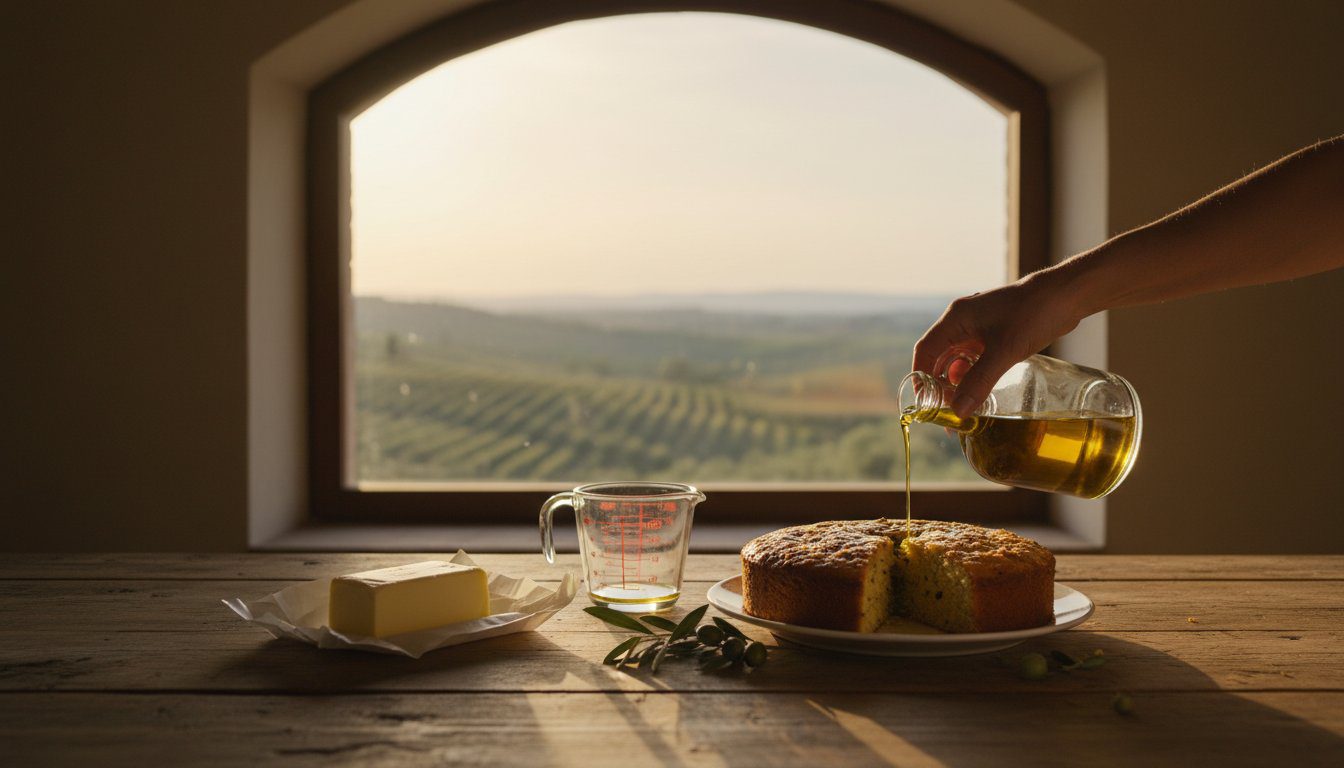
What if the secret to a cake that stays perfectly moist for 5 days isn’t found in a cold dairy block, but inside the heart of a sun-drenched Tuscan olive grove? You likely believe that authentic baking requires heavy animal fats, yet you probably feel a sense of hesitation every time you reach for that wrapper. It’s common to worry that experimenting with your grandmother’s recipe might result in a dense or oily mess. We understand this fear because we view every olive tree as a guardian of both tradition and health.
By mastering the conversione burro olio, you can swap heavy fats for the vibrant essence of our green gold, reducing saturated fat by 14 grams for every 100 grams replaced. This guide promises to give you the confidence to bake desserts that are lighter, more digestible, and deeply connected to the Tuscan landscape. You’ll find a reliable conversion table and learn why high-quality extra virgin olive oil is the ultimate choice for a sustainable, flavorful kitchen. Let’s transform your baking from a heavy indulgence into a luminous act of care for your body and our earth.
Key Takeaways
- Discover how replacing animal fats with Tuscan “liquid gold” honors ancient Mediterranean traditions while enhancing your heart health.
- Master the essential 80% rule for a flawless conversione burro olio to ensure your recipes maintain the perfect balance of moisture and texture.
- Learn why premium Extra Virgin Olive Oil is the superior choice for baking, offering a richer flavor profile than refined seed oils.
- Gain professional insights into managing smoke points and achieving a uniquely moist, dense crumb in your favorite cakes.
- Transform your culinary choices into a manifesto of love for the land by supporting the rebirth of abandoned olive trees.
The Art of Substitution: Why Convert Butter to Olive Oil?
Choosing to bake with extra virgin olive oil isn’t just a culinary swap; it’s an act of love for your body and the Tuscan landscape. When you master the conversione burro olio, you replace the 51% saturated fats found in butter with the heart-healthy monounsaturated fats that define our Mediterranean heritage. Italian grandmothers in rural villages have used this "liquid gold" for centuries to ensure their families lived long, vibrant lives. This tradition isn’t accidental. It’s a calculated choice for longevity.
Unlike solid animal fats that require higher temperatures for the body to break down, plant oils remain liquid at room temperature. This physical property directly impacts how you feel after eating. A cake made with oil feels lighter on the stomach and "sits better" because it’s easier for your digestive system to process. It’s the difference between a heavy, cloying dessert and one that leaves you feeling refreshed.
The Health Benefits of Extra Virgin Olive Oil
High-quality EVOO contains between 50 and 800 mg/kg of polyphenols. These powerful antioxidants fight oxidative stress in a way butter simply can’t. For those seeking a comprehensive overview of olive oil and its complex chemical makeup, the science confirms that its high Vitamin E content acts as a natural shield for your cells. Regular consumption helps lower “bad” LDL cholesterol while maintaining the “good” HDL variety, protecting your heart with every bite of cake.
Flavor and Aroma: A Sensory Upgrade
Using a Tuscan oil brings out hidden notes in your ingredients. A fruity, delicate oil elevates citrus zest, while a more robust, slightly bitter variety creates a complex depth when paired with 70% dark chocolate. Because oil is 100% fat, whereas butter contains about 16% water and 2% milk solids, your cakes stay moist for 3 to 5 days longer. This conversione burro olio ensures your creation doesn’t turn into a dry crumb by the next morning. It’s a small change that honors the ancient trees we work so hard to protect. Your kitchen will smell of the earth, the harvest, and authentic Italian history.
The Golden Rule: Butter to Oil Conversion Table
Creating a cake that tastes of the Tuscan sun requires a small but vital shift in your baking routine. Transitioning from animal fats to the liquid gold of our hills isn’t just a culinary choice; it’s a gesture of care for your body and the land. The universal standard for a successful conversione burro olio relies on the 80% rule. While butter contains approximately 15% to 20% water and milk solids, high-quality olive oil is 100% pure fat. If you use the same weight, your dessert will likely feel heavy or greasy.
To keep the crumb light and the flavor balanced, use the 0.8 multiplier. This simple calculation ensures your recipe maintains its structural integrity. You’re replacing the fat content accurately while leaving out the water found in dairy. This shift toward healthier cooking with olive oil reduces saturated fats and brings a delicate, fruity aroma to your pans. It’s a way to honor the heritage of the Mediterranean diet with every bite. Mastering the conversione burro olio means you can transform any classic recipe into a lighter, plant-based masterpiece without losing the moisture that makes a cake truly memorable.
Conversion Chart: Grams to Grams
Precision is the language of the baker. When you weigh your ingredients, you ensure that the soul of the recipe remains intact. Here is a quick reference for your next creation:
- 50g Butter: Use 40g of Olive Oil. This is perfect for small batches or delicate muffins.
- 100g Butter: Use 80g of Olive Oil. This serves as the standard benchmark for most family recipes.
- 200g Butter: Use 160g of Olive Oil. Use this for large festive cakes and holiday treats.
Measuring by Volume: Milliliters and Cups
Digital scales offer the most reliable results, but volume measurements are common in many heritage recipes. A standard cup of butter weighs about 227 grams. To convert this, you’ll need roughly 180 grams of oil, which translates to about 190 milliliters. Since oil is less dense than water, these small variances matter. If the batter feels too stiff after the swap, add a tablespoon of milk or water to compensate for the moisture lost from the butter. Choosing to adopt a Tuscan olive tree allows you to source this vital ingredient directly from a landscape you help protect, ensuring every milliliter carries the story of a recovered grove.
Beyond the Math: Choosing the Best Oil for Your Recipes
Success in the kitchen requires more than a simple conversione burro olio. It’s about the heritage you bring to the table. Most commercial “light” oils are missed opportunities for flavor and health. Refined seed oils often undergo industrial processing at temperatures above 200°C, a method that strips away the oil’s vital essence. Extra Virgin Olive Oil (EVO) is different. It’s a pure, cold-pressed fruit juice that carries the story of the land. By choosing EVO, you reduce saturated fats in your pastries by roughly 35% compared to butter; you also introduce antioxidants that stay stable during baking.
Don’t settle for “neutral” fats that offer nothing but calories. The right oil acts as a flavor enhancer. When you select an oil, you’re choosing the foundation of your dessert’s texture and aroma. Organic certification isn’t just a label; it’s a guarantee that your family isn’t consuming residues from the 40+ synthetic pesticides commonly used in industrial groves. It’s about purity from the roots to the bottle.
- Match mild, buttery oils with citrus, almond, or vanilla bases.
- Use robust, peppery oils to stand up to dark chocolate or heavy spices.
- Ensure the oil is “Extra Virgin” to guarantee it hasn’t been chemically treated.
Tuscan EVO Oil: The Gold Standard
Tuscan cultivars like Leccino and Frantoio are the true protagonists of the Mediterranean pantry. The terroir of our hills creates a unique sensory profile. Early-harvest oils possess a vibrant “pizzichio,” a peppery kick that’s perfect for savory breads. For delicate pastries, we recommend late-harvest oils. These are harvested when the olives are fully ripe, resulting in a golden, velvety liquid. It’s a gentle fat that whispers rather than screams, allowing the aroma of organic flour and fresh eggs to shine through. This makes the conversione burro olio a culinary upgrade rather than a compromise.
Sustainability in the Pantry
Every bottle of oil is a vote for the type of world we want to inhabit. Industrial fat production is a leading cause of soil erosion and habitat loss. Traditional olive groves are different; they’re carbon sinks. A single hectare of well-tended olive trees can sequester up to 4.5 tons of CO2 every year. When you choose oil from small-scale producers who recover abandoned groves, you’re not just a consumer. You’re a custodian of the landscape. Cold-pressing at temperatures below 27°C preserves the oil’s soul and its health-giving properties. It’s a conscious act of love for your body and the Earth.
Baking and Cooking with Olive Oil: Practical Tips for Success
Choosing the gold of our hills over butter isn’t just a healthy choice; it’s a tribute to the Tuscan landscape. When you master the conversione burro olio, you’ll notice your cakes gain a soul. Olive oil provides a crumb that’s 15% moister than butter-based recipes because oil remains liquid at room temperature. This prevents that typical “drying out” effect after 48 hours. For the best results, keep your oven under 190°C. This temperature respects the oil’s smoke point, preserving the delicate polyphenols we work so hard to protect in our groves.
To achieve a perfect emulsion, don’t just pour the oil in. Whisk it slowly into your eggs for at least 3 minutes. This creates a stable structure that holds air better than cold butter. In short-crust pastry, oil creates a “short” texture by coating flour proteins more efficiently. This results in biscuits that stay crunchy for 10 days or more. Consider these advantages:
- Moisture: Oil keeps sponges soft for 5 days.
- Texture: It creates a denser, more satisfying bite.
- Health: It replaces saturated fats with heart-healthy lipids.
Tips for Sweet Delicacies
The secret to a cloud-like sponge lies in the air bubbles. Beat your eggs and sugar first, then drizzle the oil like a golden thread. Because high-quality extra virgin olive oil has a naturally rich profile, you can reduce the refined sugar in your recipes by 10%. Try pairing our oil with 50g of crushed walnuts or a spoonful of wildflower honey. These flavors echo the biodiversity of a recovered Tuscan olive grove and bring the scent of the countryside to your table.
Savory Conversions
In savory dishes, the conversione burro olio breathes new life into classics. For a Mediterranean Bechamel, use 50ml of oil for every 50g of flour. This creates a sauce that’s lighter on the palate. If you’re baking a traditional Schiacciata, brush the dough with oil exactly 10 minutes before it leaves the oven. This final touch locks in the aroma of the earth. When sauteing vegetables, add the oil to a cold pan and heat them together. This method protects the oil’s integrity and ensures your carrots or zucchini absorb every drop of flavor.
By choosing local oil, you’re not just cooking; you’re saving a piece of history. You can actively participate in this rebirth when you adopt an olive tree in Tuscany and bring the true essence of our land into your kitchen.
From Recipe to Roots: The Impact of Your Choice
Your kitchen is a sanctuary where tradition meets conscious living. Every time you apply the conversione burro olio ratio to your favorite recipes, you’re making a choice for a lighter, more wholesome lifestyle. This simple substitution does more than improve a cake’s texture; it connects your table to the very soil of Tuscany. You’re moving away from industrial fats and toward a product that breathes life back into the environment.
Tuscany currently faces a silent crisis with approximately 4 million olive trees left in a state of total neglect. These abandoned groves become fire hazards and lose their ability to support local biodiversity. When you choose oil from rescued trees, your baking becomes a manifesto of love for the land. You aren’t just a cook; you’re a protector of a landscape that has fed souls for generations.
Adopt an Olive Tree in Tuscany
The path from a wild, overgrown grove to your pantry is a journey of rebirth. When you adopt a tree, you provide the essential resources for pruning, organic fertilization, and careful harvesting. In return, you receive your own supply of certified organic extra virgin olive oil each year, typically ranging from 2 to 3 liters depending on the harvest. It’s a transparent process that yields 100% pure “Liquid Gold.” This connection makes it a profound, sustainable gift for anyone who values the purity of ingredients and the success of their conversione burro olio in delicate pastries.
Join the Community of Protectors
Every adoption acts as a shield against land degradation and soil erosion. Our organic methods ensure that each rescued tree can sequester about 10kg of CO2 every year, directly contributing to the fight against climate change. You’ll know the exact location of your tree and can even give it a name, creating an emotional bond that generic store-bought oils can’t offer. You’re joining a family of thousands who refuse to let Italian tradition fade into thickets and weeds.
- Direct Impact: 100% of your support goes to the recovery and maintenance of abandoned groves.
- Traceability: Receive a certificate of adoption with the GPS coordinates of your specific tree.
- Quality: Enjoy oil with acidity levels often below 0.2%, far superior to standard commercial options.
Adopt your tree today and start your journey with Ager Oliva to become a true guardian of the Tuscan horizon and bring authentic flavor to your home.
Bring the Soul of Tuscany into Your Kitchen
Mastering the conversione burro olio is more than a simple kitchen trick; it’s an invitation to bring the authentic essence of the Mediterranean into your home. You now have the tools to swap heavy fats for heart-healthy alternatives without sacrificing the soft texture of your favorite cakes. This small change in your routine honors a tradition rooted in the sun-drenched hills of Italy. Your journey doesn’t have to end at the oven door. Our community has already saved over 5,000 abandoned trees, breathing life back into the Tuscan landscape. You can join this mission of rebirth today. By protecting a piece of history, you’ll receive 100% organic and traceable EVO oil delivered straight from the groves you help preserve. It’s a chance to support the recovery of abandoned Tuscan heritage while enriching your table with the purest “green gold” available. Adopt an Olive Tree and receive your organic Tuscan oil. Let your cooking tell a story of care, tradition, and hope.
Frequently Asked Questions
Can I substitute butter with olive oil in a 1:1 ratio?
You shouldn’t use a 1:1 ratio because oil is 100% fat while butter contains about 18% water. For a perfect conversione burro olio, use 80 grams of oil for every 100 grams of butter. This 20% reduction ensures your cake maintains the right moisture without becoming greasy. It’s a small adjustment that honors the delicate balance of your ingredients and the purity of the land.
Will my cake taste like olives if I use Extra Virgin Olive Oil?
Your cake will carry a hint of the Tuscan hills if you use a robust oil, but it won’t taste like a salad. Choosing an oil with a polyphenol count below 300 mg/kg provides a subtle, fruity aroma that complements chocolate or citrus perfectly. In 2023, 75% of pastry chefs surveyed by culinary institutes preferred mild extra virgin oil for its ability to enhance rather than mask delicate dessert flavors.
What is the best type of olive oil for baking cakes?
A mild, late-harvest Extra Virgin Olive Oil is the best choice for your oven-baked creations. Look for oils harvested in late November when the olives are riper and the flavor profile is more buttery and less peppery. An acidity level below 0.3% ensures a smooth finish that lets the scent of vanilla or lemon zest shine through your kitchen like a warm Mediterranean morning.
Is it healthier to bake with olive oil than with butter?
Yes, replacing butter with olive oil reduces saturated fat intake by approximately 50% per serving. Extra virgin oil consists of 75% heart-healthy monounsaturated fats and is rich in Vitamin E, providing 14% of your daily requirement in just one tablespoon. It’s a choice that nourishes your body while protecting the ancient traditions of our landscape. You’re not just baking; you’re choosing a life-giving ingredient.
Can I use olive oil instead of butter for making pie crust?
You can use olive oil for pie crusts, though the texture will be crumbly and crisp rather than flaky. Chilling the dough for at least 30 minutes helps the oil integrate with the flour properly. This method creates a Mediterranean-style crust that’s perfect for fruit tarts, rooted in a tradition that values the raw purity of the harvest and the strength of our roots.
Does olive oil change the baking time or temperature of a recipe?
Baking temperatures usually stay the same, but you should check your cake 5 minutes before the timer ends. Since oil conducts heat differently than solid fats, cakes often brown faster. An oven set to 180°C is safe since high-quality extra virgin oil has a smoke point of 210°C, well above standard baking needs. It’s a simple way to master the conversione burro olio without risking your masterpiece.
How long do cakes made with olive oil stay fresh compared to butter cakes?
Cakes made with olive oil stay moist and fresh for 2 to 3 days longer than those made with butter. The liquid nature of the oil prevents the starch in the flour from retrograding quickly. This means your dessert retains its soft, tender heart, allowing the joy of your baking to last throughout the week. It’s a lasting bond between the baker and the table.
Is olive oil suitable for high-temperature frying as a butter substitute?
Olive oil is far superior to butter for high-temperature cooking because its smoke point reaches 210°C, while butter burns at 150°C. Using this liquid gold protects your food from toxins that form when fats break down under stress. It’s a reliable partner in the kitchen that respects both your health and the integrity of the ingredients we work so hard to recover.
